Affiliate marketing is a powerful way to grow your business, but it only works if you have one key element - tracking.
Affiliate tracking is the backbone of your affiliate program, ensuring accurate reporting, fair commissions, and informed decision-making. Without it, you risk wasting your budget, missing sales, and failing to optimize performance. This guide breaks down the basics of how affiliate tracking works and why it’s crucial for growth.
What is affiliate marketing
Affiliate marketing is a partnership between businesses (advertisers) and promoters (partners, affiliates or publishers). Affiliates promote your products, and when they drive sales, they earn a commission.
It’s a win-win:
Advertisers get more customers and sell more products.
Affiliates earn rewards for their marketing efforts.
But to ensure everyone gets paid accurately, tracking is essential.
What is affiliate tracking
Affiliate tracking monitors the customer journey from the moment they click an affiliate link to completing a purchase. It ensures affiliates are credited for their contributions, helping businesses optimize their marketing strategies.
Key benefits of affiliate tracking:
See who drove the sale - Know which affiliate made the sale.
Reward the right affiliate - Ensure accurate commissions.
Optimize campaigns - Use data to improve performance.
Maintain compliance - Follow tracking standards for transparency and accuracy.
Why tracking is essential for your growth
Tracking isn’t just about crediting sales - it’s about making informed decisions.
Increased revenue: Accurate tracking ensures every sale is accounted for, driving more conversions.
Efficient budget allocation: Tracking helps you invest in high-performing channels, maximizing ROI.
Motivated partners: Fair and correct commission payments keep affiliates engaged and eager to promote your brand.
Affiliate tracking drives the success of your program by ensuring partners are credited and accurately paid, while campaigns are optimized for better performance. The better your tracking setup the more efficiently your business grows and the stronger your partnerships become.
How does affiliate tracking work
Affiliate tracking follows a customer’s journey from click to conversion.
Affiliates generate a unique link that includes their ID and campaign details.
A customer clicks an affiliate’s link and a tracking cookie or server-based method stores the affiliate’s information.
Tracking tools monitor their journey - whether they buy immediately or return later, tracking ensures the right affiliate gets credit.
A conversion is recorded - when the sale happens, the tracking system ensures the correct affiliate is credited, whether via cookies or server communication.
Tracking methods and why they matter
To ensure every sale is attributed correctly, multiple tracking methods are used and needed - it’s called hybrid tracking. They fall into two categories: client-side and server-side tracking.
Client-side tracking relies on the user’s browser to capture data using cookies, tags, and pixels. It’s simple but can be blocked by privacy settings or ad blockers.
Cookies – Remember returning users.
Tags and pixels – Track clicks and purchases in real-time.
Server-side tracking sends data directly between the advertiser’s and network’s servers, bypassing browsers. This method is more reliable, ensuring tracking even when cookies are blocked.
Awin’s tracking standards
To ensure reliable and accurate tracking, Awin uses the following tracking methods:
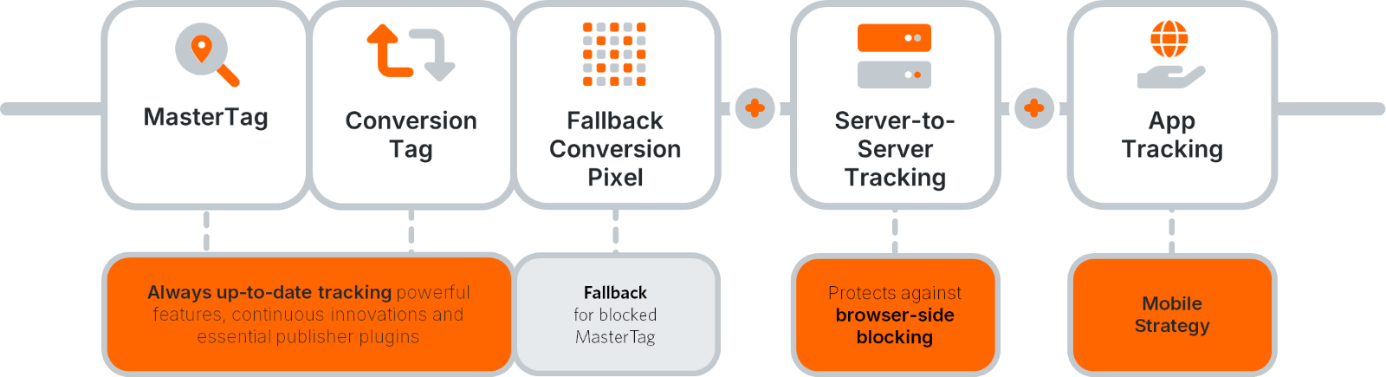
MasterTag: A container that loads tracking pixels and plugins to track user interactions and conversions. It must be placed on all pages except payment pages.
Fallback pixel: Used when other tracking methods fail (e.g., cookies are blocked). It’s placed on confirmation pages to ensure sales are still recorded.
S2S tracking: Bypasses cookies and sends conversion data directly from the advertiser’s server to Awin’s server, ensuring reliable tracking even with cookie and privacy restrictions.
App tracking: Tracks in-app purchases and interactions, ensuring purchases made in mobile apps are properly recorded.
These methods ensure better reporting, fair affiliate payments, and compliance with privacy regulations.
Best practices for effective tracking
To ensure accurate, compliant, and proper tracking, follow these best practices:
Test your setup regularly - Validate your tracking with real transactions.
Use multiple tracking methods - Combine cookies, pixels, MasterTag, and S2S for complete tracking.
Enable app tracking - If you have a mobile app, ensure in-app purchases are tracked.
Stay updated - Adjust tracking to comply with evolving regulations.
Additional resources
To find out more about tracking please check out these guides: